
Detailed motor grader working & operation guides
Practical upkeep and servicing information
Complete specs and models comparison
What the moldboard actually does
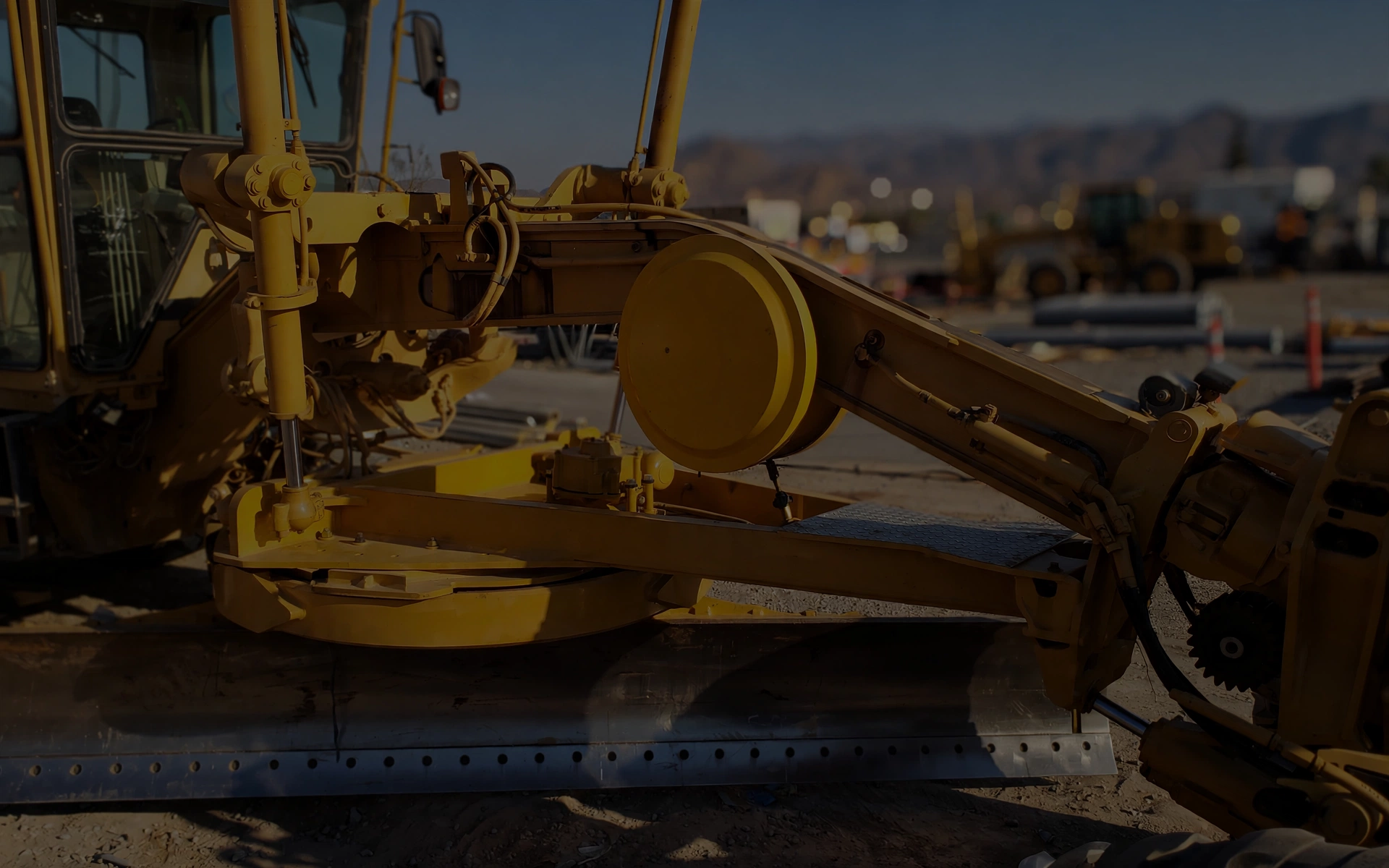
A motor grader's blade moves on six independent axes. That's what separates it from every other earthmoving machine β and it's why two operators can run the same grader and get completely different results. Move the controls, or pick a job below and watch the blade set itself up.
The six axes, and what each one is for
- Circle rotation
- Spins the moldboard through a full turn beneath the drawbar. The angle relative to the direction of travel decides where cut material goes β square to the frame it pushes straight ahead, angled it rolls material along the blade face and discharges off the trailing end.
- Blade pitch
- Rakes the top of the moldboard forward or back. Pitched forward the cutting edge bites; pitched back the blade carries and mixes material instead of cutting it. Wrong pitch is the most common reason a blade chatters.
- Blade slope
- Raises one end of the moldboard relative to the other, using the independent lift cylinders. This sets the cross-slope of the finished surface, and it's what cuts the shoulder fall on a crowned road.
- Side shift
- Slides the moldboard laterally along the circle, moving the blade out past the wheel line. Essential for reaching into a ditch or working close to a kerb without putting the machine there.
- Frame articulation
- Bends the machine at the hinge between the front and rear frames. Offsetting the front end keeps the tyres out of the cut and lets the operator crab-steer against the sideways push of a heavy pass.
- Wheel lean
- Tips the front wheels off vertical. An angled blade pushes the front of the machine sideways; leaning the wheels into that thrust holds the grader on line instead of letting it drift out of the cut.
Best Selling Product
Types of Motor Graders
Understanding the different classes of motor graders and where each one fits best.
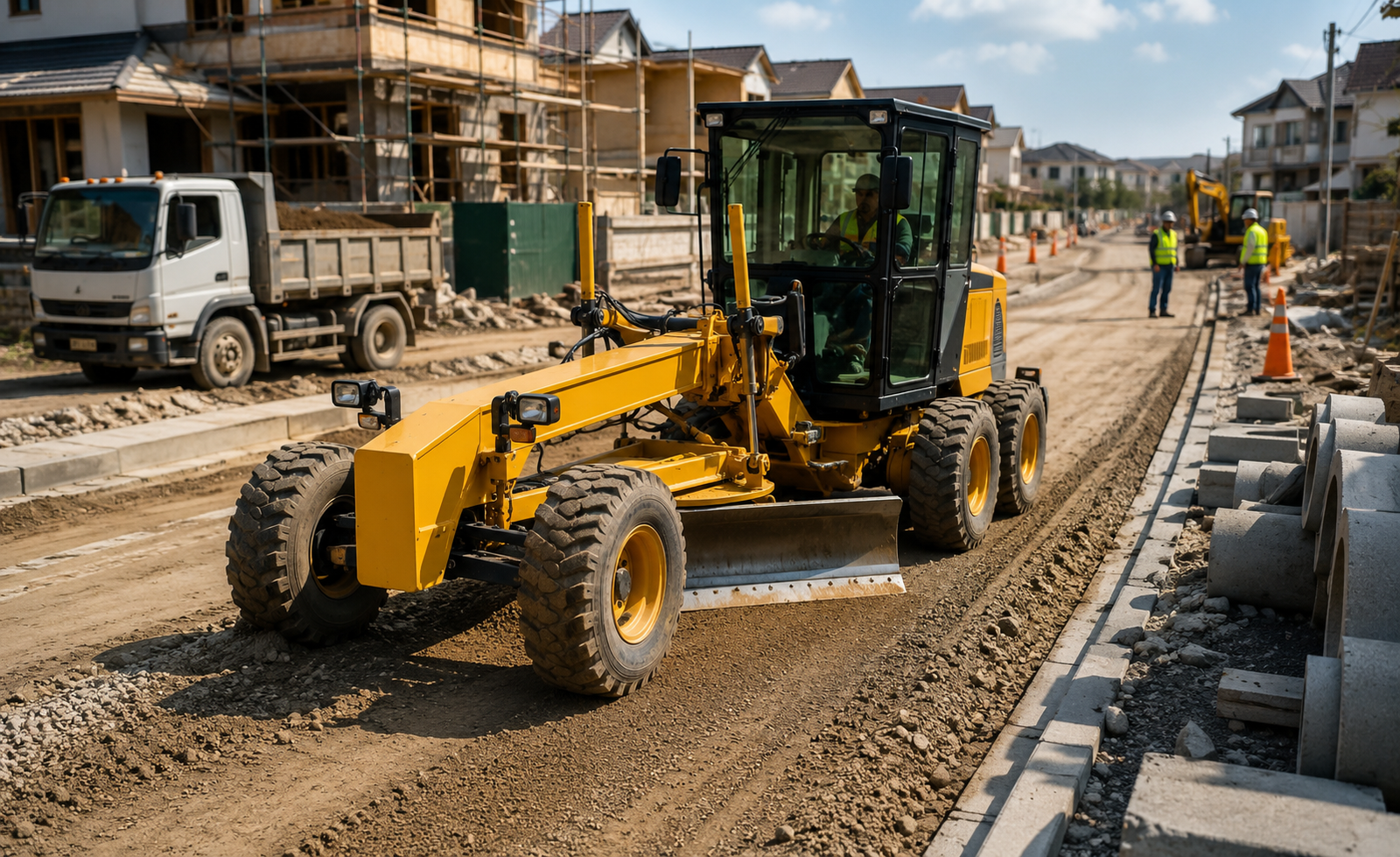
Compact / Small Motor Graders
Compact motor graders are built for tighter job sites and lighter grading tasks where maneuverability matters as much as power. Their smaller frame makes them easier to operate in confined spaces such as residential streets, small parking lots, and short access roads, while still delivering precise blade control for fine leveling work.
- Operating Weight8,000 β 15,000 lbs
- Blade Length8 β 10 ft
- Engine Power90 β 140 HP
Medium-Duty Motor Graders
Medium-duty graders strike a balance between power and control, making them the most commonly used class on general construction and municipal road projects. They handle a wider range of tasks β from initial rough grading to final surface leveling β and are versatile enough for both urban infrastructure work and rural road maintenance.
- Operating Weight15,000 β 30,000 lbs
- Blade Length10 β 12 ft
- Engine Power140 β 200 HP
Heavy-Duty / Large Motor Graders
Heavy-duty motor graders are engineered for large-scale earthmoving and high-production grading work. With greater weight, longer blades, and higher horsepower, they're suited for major highway construction, mining haul roads, and large infrastructure projects where efficiency and heavy material handling are the priority.
- Operating Weight30,000 β 55,000+ lbs
- Blade Length12 β 16 ft
- Engine Power200 β 300+ HP
Latest From The Blog

Motor Grader Tire Safety: 4 Deadly Mistakes Most Owners Ignore Daily

Motor Grader Operator Training: 5 Negative Habits Ruining Your Grading Accuracy

2026 MotorGrader Maintenance: 7 Costly Errors That Destroy Your Motor Grader Blade

New Motor Grader Price Guide: 9 Hidden Fees Increasing Your 2026 Budget
How much life is left in your cutting edge?
A cutting edge is the cheapest part on the machine and the one most often run too long. Measure what's left below the moldboard, set it on the gauge, and see where you actually are β plus what the wear you're carrying is costing you every week you leave it on.
Stamped on the edge, or check the parts book.
Hold a rule against the moldboard base and measure straight down to the worn face. Take it at the most worn point, not the average β that's the point that decides.
These are planning figures built from the numbers you entered above, not measured results. The efficiency loss curve assumes a blunt edge needs more down-pressure and more passes to hold grade β how steeply that bites depends on your material. Change the inputs to match your own machine and rates.
Reading a worn cutting edge
- Measure at the worst point
- Edges rarely wear evenly. The middle usually goes first on a road maintenance machine, while the ends go first if the operator works angled most of the day. The thinnest section is the one that sets your replacement date, so measure there rather than averaging across the blade.
- The bolt line is the hard stop
- Once wear reaches the bolt holes, the bolt heads start contacting material and the moldboard base itself begins to wear. Replacing an edge is routine maintenance; repairing or replacing a moldboard is not, and it costs many times more.
- Flip a reversible edge on schedule
- Double-bevelled edges are designed to be turned over once, putting the unworn bevel down. Waiting until the first side is nearly gone wastes the benefit, because by then you've often rounded the section that was meant to become your new cutting face.
- Rounded means pushing, not cutting
- A sharp edge slices into material. A rounded one rides up over it, so the operator compensates with more down-pressure and more passes. That's where the fuel and hours go long before the edge reaches the bolts.
- Check the end bits and curb guards
- The corners take the heaviest punishment and often wear out ahead of the main edge. Replacing end bits separately is cheap, and leaving them worn exposes the moldboard corners to the same damage the bolt line protects against.
- Match the edge to the material
- Standard carbon steel suits general road maintenance. Abrasive material such as rock, recycled asphalt or heavy gravel wears it fast enough that a carbide-insert or heat-treated edge often works out cheaper per hour despite the higher up-front cost.
The Engineering Behind Every Motor Grader
A closer look at the machines that shape roads, sites, and terrain worldwide.